The Color Rendering Index (CRI) is one of the most important specs to check when buying LED lighting — but it is often misunderstood. In simple terms, CRI tells you how accurately a light shows the true colors of objects. This guide explains CRI, why it matters, and how to choose the right CRI for your LED strip lights.
Related: read our custom made led pcb.

1. What Is the Color Rendering Index (CRI)?
CRI is a quantitative measure of how accurately a light source renders the colors of objects, compared to natural daylight. The scale runs from 0 to 100 — the higher the value, the better the color rendering. A CRI of 100 means perfect color rendering, equivalent to daylight.
CRI is calculated by comparing how well a light renders a set of standard colors against a reference source under controlled conditions. The result is an average score.

2. Why CRI Matters

Accurate Color
High CRI shows objects in their true colors — critical for retail, photography, and artwork.
Visual Comfort
Natural, accurate color makes spaces feel more comfortable and inviting.
Application Fit
Different CRI levels suit different spaces — matching CRI to the use case is key.
3. CRI in LED Strip Lights
LEDs produce light through a semiconductor process that can create a narrow spectrum. To reach high CRI, manufacturers use phosphor coatings or multiple chips with different wavelengths. Three factors matter most in LED strips:
High-quality chips with advanced phosphor coatings achieve higher CRI values.
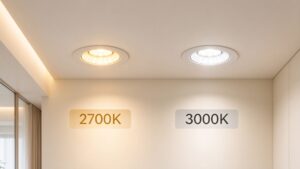
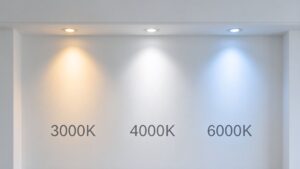
Warm white (2700K–3000K) typically has higher CRI than cool white (3500K–5000K).
Combining chips with different wavelengths creates a broader spectrum for better rendering.


4. CRI70 vs CRI80 vs CRI90 — Which One Do You Need?
Lightstec offers LED strips in CRI70, CRI80, and CRI90 to match different budgets and applications:
| CRI Level | Color Rendering | Best For | Benefit |
|---|---|---|---|
| CRI70 | Basic color rendering | General & ambient lighting | Best cost-performance |
| CRI80 | Improved, natural colors | Retail, hospitality, homes | Great value, enhanced comfort |
| CRI90 | Near-daylight accuracy | Galleries, museums, showrooms | Superior color accuracy |
5. Practical Applications of CRI in LED Strip Lights
Commercial
High CRI for retail, showrooms, and museums where accurate color displays products and artwork.
Residential
High CRI makes interiors feel more vivid and natural in homes.
Artistic
Stage lighting, exhibitions, and decorative installations need precise color.


6. How to Improve CRI in LED Strip Lights
Premium chips with advanced phosphor coatings significantly improve CRI.
Combine LEDs with different wavelengths to broaden the spectrum for better rendering.
Select LEDs closer to natural daylight (2700K–5000K) to enhance CRI for specific applications.
Recommended LED Strip Products
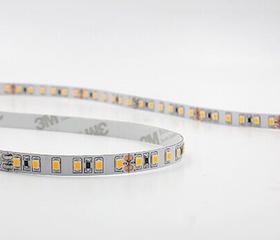
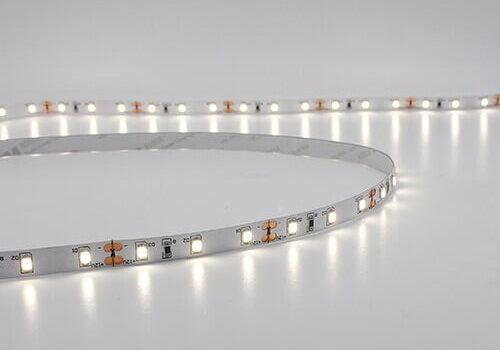
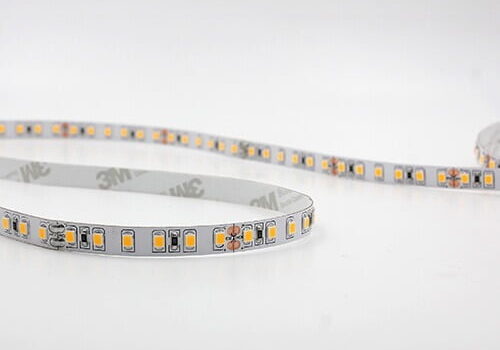
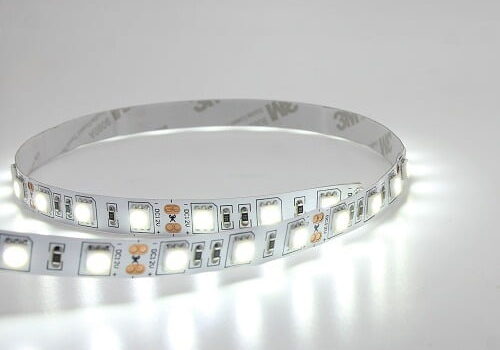
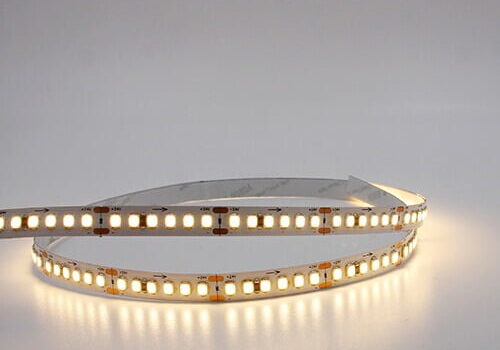
High-CRI LED strips from Lightstec — available in CRI70, CRI80, and CRI90:
FAQ
What is a good CRI for LED strip lights?
For general use, CRI80 is a good balance of quality and cost. For retail, photography, or artwork, choose CRI90. CRI70 is suitable for budget-friendly ambient lighting.
Does warm white have higher CRI than cool white?
Yes. Warm white LEDs (2700K–3000K) typically achieve higher CRI values than cool white LEDs (3500K–5000K).
How do I know the CRI of my LED strip?
Check the product specification sheet. Reputable manufacturers like Lightstec clearly state the CRI value (70, 80, or 90) for each product.
Choose the Right CRI for Your Project
Lightstec offers CRI70, CRI80, and CRI90 LED strips with factory-direct pricing.

Download Our Latest Catalog as a PDF
To save you time, we have prepared a PDF catalog with all our latest LED light products. Leave your email and get it immediately.

JerryHu
Founder of Lightstec. Engineering degree. 13+ years in LED lighting. Sharing knowledge and solutions for LED lighting.
Learn More Professional Led Classes Which Less People Tell You Before You Make Mistake.